

Can the Labor Department fine employers who break the law? The Supreme Court seemed divided.
The government's lawyer warned that losing would leave enforcement 'a mess' and called a broad ruling 'the nuclear option.'
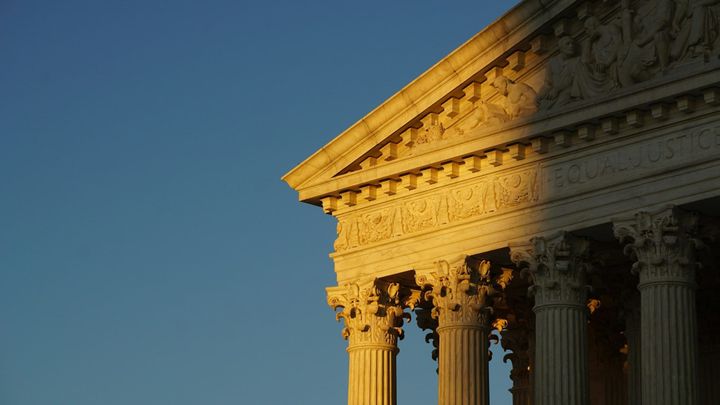
The Supreme Court heard arguments Tuesday over whether the Labor Department can make a New Jersey farm pay $556,745.80 for breaking the promises it made to farmworkers it brought in on H-2A guestworker visas. The justices seemed divided, NPR reported. The answer could decide whether agencies that police workplaces can keep fining lawbreaking employers in their own courts or must take every case to a federal judge.
The case is Department of Labor v. Sun Valley Orchards, LLC, No. 25-966. The court agreed to decide two questions, according to its docket: whether the Constitution bars the department from deciding these cases itself, and whether the H-2A law lets it.
What the farm was found to have done
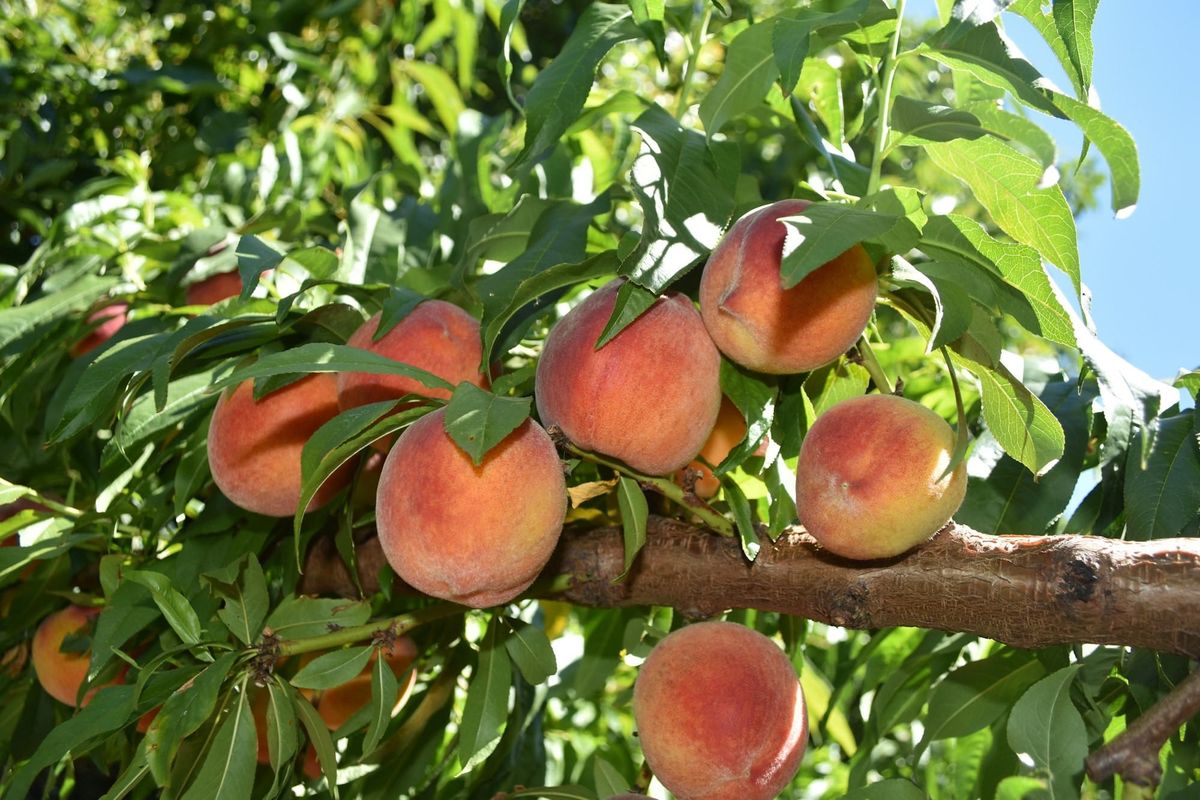
Sun Valley brought in 96 foreign workers and hired 51 U.S. workers in 2015 to pick crops, according to the Third Circuit's opinion. Labor Department investigators found housing with missing window screens, an "insect infestation throughout the camp," sinks without hot water and mattresses on the floor. The farm had promised free kitchen access so workers could cook. Instead, investigators found, it charged them for meals without notice, and a supervisor sold them drinks at a profit. Vehicles that carried workers had worn tires and unlicensed drivers. And the department found the farm "constructively forced" some workers to go home early, then had them sign forms saying they left for "personal reasons."
A Labor Department administrative law judge (an in-house agency judge) agreed with most of the findings and set the bill at $211,800 in penalties and $344,945.80 in back wages. The department's Administrative Review Board affirmed. Sun Valley disputes the findings.
In 2025, the U.S. Court of Appeals for the Third Circuit sided with the farm. Relying on the Supreme Court's 2024 decision in SEC v. Jarkesy, Judge Hardiman wrote that "Sun Valley was entitled to have its case decided by an Article III court," meaning a federal court with life-tenured judges.
What each side argued
Sarah Harris, the Principal Deputy Solicitor General, argued that the dispute involves "public rights," a category the government can decide in-house. The government is "exercising its plenary immigration power on the employer's behalf," she said, and the farm agreed to the program's conditions in exchange.
Robert Johnson of the Institute for Justice, Sun Valley's lawyer, said the century-old border-penalty case the government leans on "is a far cry from a case about labor issues at a farm in New Jersey." He added: "To be sure, the statute contemplates penalties, but it says nothing about where those penalties should be adjudicated."
Where the justices landed
Chief Justice John Roberts told Harris, according to the transcript, "it seems to me you're still trying to get -- extend that broad authority beyond the justification for its application."
Justice Ketanji Brown Jackson pushed back on the farm. "It seems like you're just sort of fighting the reality of the nature of this program," she told Johnson, a program meant to ensure "that we don't have farm workers coming in and undercutting domestic workers." Justice Brett Kavanaugh said the farm's proposed line "is really at war with clarity."
When Justice Elena Kagan asked why the government shouldn't "just go to court always," Harris said that would "raise massive concerns about under-enforcement of the law just given resource constraints." She closed: "It would be a big deal for the government to lose, but an even bigger deal would be to have a mess."
Businesses keep testing Jarkesy
Jarkesy held that the SEC can't impose fraud penalties through in-house hearings without a jury, the Congressional Research Service explains. Since then, businesses have used it to challenge agency enforcement, part of a pattern with mixed results. For example:
- Aug. 19, 2025: The Fifth Circuit upheld orders halting National Labor Relations Board cases against SpaceX, Energy Transfer and Findhelp, finding the board's structure likely unconstitutional.
- March 2026: The Fifth Circuit ruled in Intuit v. FTC that the FTC must bring deceptive-advertising cases in federal court, even when it seeks no money, CRS reports.
- June 4, 2026: The Supreme Court ruled 8-1 for the FCC in FCC v. AT&T, rejecting jury-trial challenges to fines of about $57 million against AT&T and $47 million against Verizon. A carrier that refuses to pay gets a fresh trial in federal court before it can be made to.
What it means for workers
Jarkesy left standing Atlas Roofing, a decision that allowed in-house penalties under the federal workplace safety law. CRS notes that some agencies, including the Occupational Safety and Health Review Commission and the Federal Mine Safety and Health Review Commission, can pursue penalties only in agency proceedings. A broad ruling for Sun Valley could leave those enforcers stuck unless Congress acts.
The court hasn't ruled. Its term usually runs until late June or early July, and a decision is expected by then.
Sources
- Docket No. 25-966, Department of Labor v. Sun Valley Orchards, LLC (Supreme Court of the United States)
- Oral argument transcript, Nov. 10, 2026 (Supreme Court of the United States)
- Sun Valley Orchards, LLC v. U.S. Department of Labor, No. 23-2608 (U.S. Court of Appeals for the Third Circuit)
- Brief for the Petitioners (Department of Labor) (Supreme Court of the United States)
- Brief of Respondent Sun Valley Orchards (Supreme Court of the United States)
- Supreme Court seems split over federal agencies' ability to fine for law violations (NPR)
- Two Years After SEC v. Jarkesy: Overview of Selected Appellate Decisions (Congressional Research Service, via EveryCRSReport)
- Space Exploration Technologies Corp. v. NLRB, No. 24-50627 (U.S. Court of Appeals for the Fifth Circuit)
- FCC v. AT&T, Inc., No. 25-406 (Supreme Court of the United States)
- Supreme Court procedures (Supreme Court of the United States)

Comments ()