

Trump's DOJ won't appeal the block on his mail-ballot rule. Twelve GOP states will.
They want the Postal Service rule revived for 2028. A Trump-appointed judge found it likely illegal.
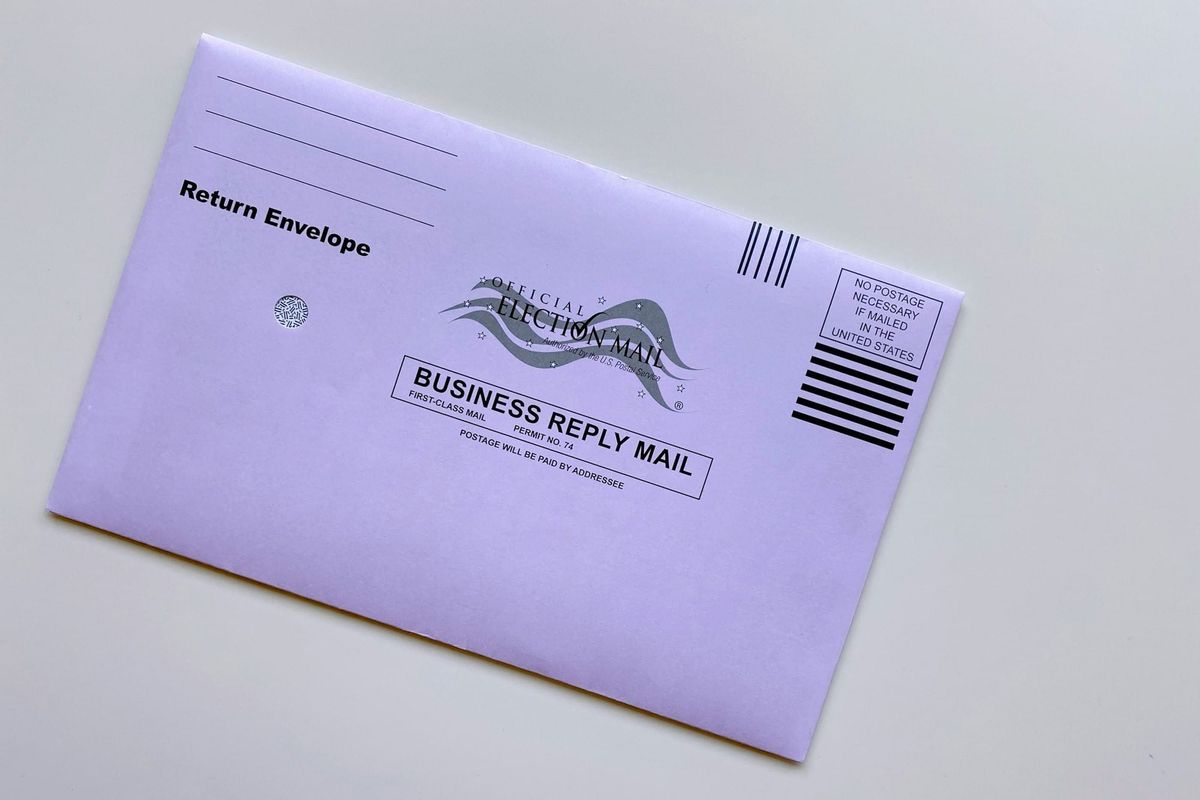
Twelve Republican-led states are asking a federal appeals court to revive President Trump's Postal Service rule for mail ballots in time for the 2028 election. Trump's own Justice Department let its deadline to appeal pass.
The attorneys general of Alabama, Florida, Indiana, Kansas, Louisiana, Missouri, Montana, Nebraska, Oklahoma, South Carolina, South Dakota and Texas filed a notice of appeal Thursday in Washington, D.C., NPR reported and Democracy Docket reported. The states joined the case as "intervener defendants" on the government's side. Justice Department lawyers told the court the administration is not appealing, NPR reported. Its deadline was Nov. 12.
What the rule would do
The Postal Service wrote the rule in late August after a Trump executive order on mail voting. States would have to upload lists of approved mail voters, with names and addresses, to a new federal portal and redesign ballot envelopes with Postal Service-approved tracking barcodes. States that didn't comply would not get their voters' ballots delivered, Democracy Docket reported.
NPR also reported on a whistleblower complaint that the online system election officials would need had not been properly tested and could have caused eligible voters to get their ballots late or not at all.
What the judge ruled
The case is DSCC v. Trump, in the U.S. District Court for the District of Columbia. It was brought by the Democratic Senatorial Campaign Committee, the Democratic Congressional Campaign Committee, the Democratic National Committee, the Democratic Governors Association, Senate Democratic Leader Chuck Schumer and House Democratic Leader Hakeem Jeffries, represented by the Elias Law Group.
On Sept. 13, U.S. District Judge Carl Nichols, a Trump appointee, blocked the rule for every federal election, including 2028. He wrote that "no statute grants the Postal Service the power to issue key parts of the Rule," NPR reported, and that "the Federal Government does not point to any record evidence that there will be significant fraud," according to Democracy Docket. His order also bars states from voluntarily working toward the rule's requirements.
A second judge, U.S. District Judge Indira Talwani in Boston, blocked the rule for the 2026 midterms only in a case brought by voting rights groups and 24 Democratic attorneys general. In September the Supreme Court refused to pause her order, over dissents from Justices Samuel Alito and Clarence Thomas.
Why the fight isn't over
The states' appeal would go to the U.S. Court of Appeals for the D.C. Circuit. They have a reason for hope. In the September Supreme Court order, Justice Brett Kavanaugh wrote that officials lacked time to "reasonably implement the rule" before the midterms, but added that "there is at least a fair prospect that the final rule falls within the Postal Service's statutory authority," NPR reported. That leaves room for the rule to come back before 2028.
The appeal may also lose support from inside. Democrats won the attorney general races in Texas and Kansas and take office in January, NPR reported, so two of the twelve states could drop out.
What it means for voters
Mail ballots are how many workers vote when shifts, child care and commutes make a Tuesday trip to the polls hard. The rule would have put the Postal Service, not state election officials, in charge of whether those ballots arrive. For now, Nichols's order keeps the rule off the table for 2028. No appeals court schedule has been set.
Sources
- GOP state officials push to revive Trump's mail voting restrictions for 2028 election (NPR, via KPBS)
- Red states aren't giving up on Trump's anti-mail voting order (Democracy Docket)
- Second judge halts Trump's election power grab, barring states from voluntarily working on mail voting rule (Democracy Docket)

Comments ()