

"Are you kidding me right now?": How Trump's DOJ lost a federal judge's trust over a golf course
Judge Ana Reyes says government lawyers misled her. Now a special master will investigate, and their law licenses could be on the line.
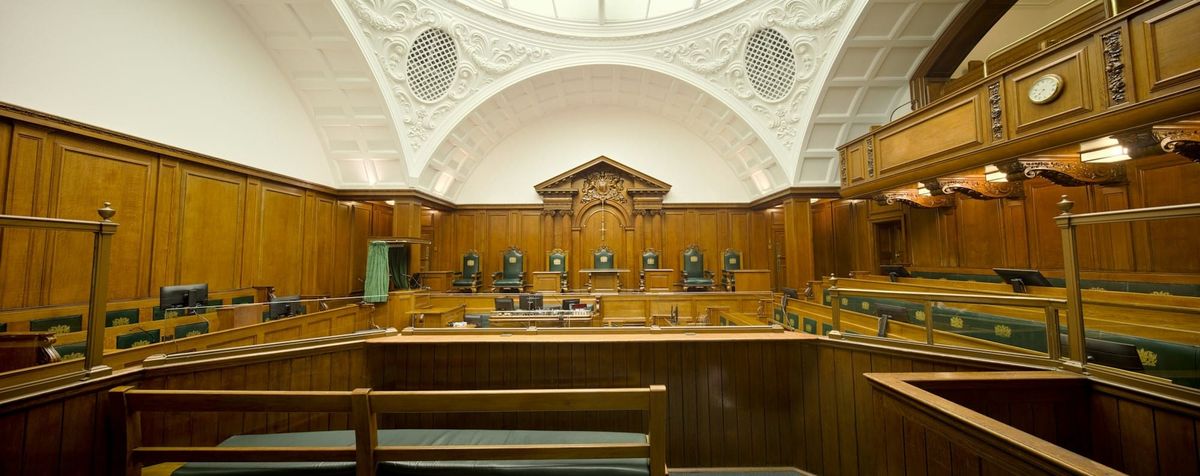
"Are you kidding me right now?"
U.S. District Judge Ana Reyes put that question to Associate Attorney General Stanley Woodward, the third-highest official at the Justice Department, at an Oct. 30 hearing in Washington. Woodward had just told her he could not say what President Trump meant when Trump posted that a public golf course in Washington would close on Nov. 15. "Seriously, Mr. Woodward, come on," she added, Bloomberg Law reported.
Reyes opened that hearing by reading aloud the D.C. Bar's rule on candor to the court, which bars lawyers from knowingly making false statements to a judge. She closed it by opening a formal inquiry into whether government lawyers had done exactly that. "For months, the court trusted, but did not verify. No longer," she said, NPR reported.
On Nov. 7, she named the person she wants to run that inquiry: Jessie Liu, who was Trump's own U.S. attorney for D.C. during his first term, the Associated Press reported. WorkersRights.News covered that announcement Sunday. This is the full story of how a fight over a public golf course turned into an ethics investigation of the Justice Department's leadership.
The sharpest lines from the bench
Reyes has spent weeks telling government lawyers, on the record, that she no longer believes them. A sample:
- On the tree cutting, at an Oct. 12 emergency hearing: "On what universe did anyone in your office think that that was acceptable?" When a DOJ lawyer said the department "did our best" on notice, Reyes answered: "You did not do your best! You did your absolute worst!" ABC News reported. She also said, "The questions go to whether or not I've been lied to."
- At that same hearing, she told the government the episode had cost it its credibility with her, Golf.com and Above the Law reported.
- On Oct. 19: "There is no universe where all of this just coincidentally happened at the same time," and "So who do I believe? Do I believe the President of the United States, or do I believe you?" Lawfare reported.
- In her 70-page preliminary injunction on Oct. 26: "Rarely, if ever, has the United States Department of Justice urged a federal court not to believe the sitting president," IBTimes reported. She also wrote that "the Court still does not speak for the trees. It speaks only for the rule of law," a line that earned her the Lawfare headline "How Judge Reyes Became the Lorax."
- On Oct. 30, pressing Woodward on Trump's post: "The third highest ranking official at the Department of Justice is telling me, telling a federal court, that he cannot say that when the president posted the 'course will close on November 15,'" he meant the course would close that day, The Independent reported. "You are saying to me, do not believe the president?" she asked, per Bloomberg Law. When Woodward said his answer fell under executive privilege, she called that "quite an extraordinary view of executive privilege," per Bloomberg Law.
How we got here
The case is DC Preservation League v. Department of the Interior in the U.S. District Court for the District of Columbia. The DC Preservation League and two local golfers sued in February to stop the Trump administration from tearing up East Potomac Golf Links, a public course in a national park on the Potomac River, and building the "World Class, championship-level golf course" Trump wants there. The suit says the administration skipped federal environmental and historic-preservation reviews. For months, the government's answer was that there was nothing to review yet: no final plan, only a "conceptual" one.
The timeline, drawn from Lawfare's account and the reporting linked below:
- May 4: At an emergency hearing, National Park Service Superintendent Kevin Griess calls the work at the course "business as usual." Reyes declines to block it but requires the government to give notice before significant work.
- June 28: Trump tours the site and says work will begin Sept. 1.
- July 2: Reyes warns she is "not going to have" officials contradict their public statements in court.
- Sept. 3: DOJ tells the court 150 trees have been removed, all "hazardous, dead, dying or invasive." Reyes says she has no reason to doubt the government.
- Sept. 29: An Interior official asks acting Park Service Director Jessica Bowron to develop a way to carry out an old landscape report for the course, Bowron later testifies.
- Oct. 5-6: Griess submits a tree-removal plan, and Bowron approves it.
- Oct. 9, 4:55 p.m., the Friday before a holiday weekend: The government notifies the plaintiffs that tree cutting will start. The same day, DOJ files a Bowron declaration saying the plans "remain in the conceptual stage."
- Oct. 10-12: Crews cut more than 400 trees.
- Oct. 12-13: Reyes holds an emergency hearing, then bars further tree removal.
- About Oct. 16: DOJ moves to disqualify Reyes. Woodward is the only lawyer who signs the motion, which accuses her of "deep-seated and unequivocal antipathy" toward the administration, The Independent reported. She denies it on Oct. 18.
- Oct. 18: Trump posts on Truth Social that Interior "has developed a plan" for a new course and that the existing one "will be closed" Nov. 15.
- Oct. 19: At a seven-hour hearing, Woodward tells Reyes "there is no plan to close the course," Bloomberg Law reported. That morning, Trump calls Reyes "a crazed lunatic."
- Oct. 26: Reyes issues a preliminary injunction barring more tree removal and requiring 10 business days' notice before any "irreparable modification" to the course.
- Oct. 28: DOJ files notice that the course will close Nov. 15, nine days after telling the court it knew of no closure plan.
- Oct. 30: Reyes reads the candor rule aloud, questions Woodward for more than two hours and opens the ethics inquiry.
- Nov. 7: Reyes says she intends to appoint Liu as special master.
- Nov. 13: Written objections to Liu's appointment are due, and the next hearing is set.
- Nov. 15: The closure date Trump announced.
Where the government's story fell apart
The ethics inquiry rests on a string of statements the record later contradicted.
"Conceptual" plans. The Oct. 9 declaration called the plans conceptual three days after the Park Service had approved a plan to clear trees. When a DOJ lawyer argued in court that Trump's posts and the government's filings could both be true, Reyes answered, "Both things cannot be true…We don't live in Schrodinger's golf course," Lawfare reported.
"Small projects." Bowron had pledged the Park Service would do only small projects at the course. Asked on the stand whether removing hundreds of trees was a small project, she said yes. Reyes asked, "How?" according to Lawfare.
The money. In a sworn declaration, Griess said the work started because the Park Service had "now received" budgetary resources. On the stand, he said there was no new money, Above the Law reported.
Who ordered it. Griess first said he acted on his own. Asked who told him to prioritize the trees, he named a Park Service official in Washington, Frank Lands, who in turn tied the work to an Oct. 5 meeting with Interior official Gregory Wischer, Lawfare reported. In her temporary restraining order, Reyes wrote that the government's version "asks rather a lot of coincidence."
The closure. Woodward told the court Oct. 19 there was no plan to close the course. On Oct. 28, DOJ filed notice that it would close Nov. 15. At the Oct. 30 hearing, Woodward also disclosed that a design submission to the National Capital Planning Commission had been in the works for weeks. No one mentioned it at the seven-hour hearing on Oct. 19. Reyes asked whether she was to understand that someone had been working on that submission for weeks while DOJ lawyers told her there was no plan, Bloomberg Law and NPR reported. She ordered DOJ to identify everyone who worked on it.
What was left out. In the injunction, Reyes found that the government's failure to disclose the tree plan "is not just conspicuous — it is misleading," Above the Law reported, quoting the opinion. She also found that officials "intentionally" timed the tree removal to avoid court review, The Independent reported.
The government's defense has been that it did its best and that it would "never violate the court's order," as Woodward put it Oct. 30, NPR reported. The Interior Department has called Reyes a "far Left activist judge," IBTimes reported. Neither response addresses the gaps between what officials told the court and what the record later showed.
What a special master is, and what Liu will look at
A special master is not a special counsel or a prosecutor. It is a neutral expert appointed by a judge under Federal Rule of Civil Procedure 53 to handle work the court can't do quickly itself. Here, that work is an investigation. Georgetown law professor David Super told the AP that Reyes "doesn't have the time to keep holding long, complex hearings and so wants a special master to narrow the issues."
Liu ran the U.S. attorney's office in D.C. from 2017 to 2020 and oversaw some matters referred by special counsel Robert Mueller, the AP reported. Trump later nominated her for the Justice Department's No. 3 job, the post Woodward holds now. She now practices at her own firm.
Reyes's order would have Liu examine whether DOJ, Interior and Park Service officials and lawyers gave the court accurate information, properly disclosed redevelopment plans and corrected statements that may have been wrong, covering conduct through Oct. 31, IBTimes reported. At the Oct. 30 hearing, Reyes also flagged the undisclosed planning submission and seawall erosion at the course that the government never raised, NPR reported, and asked whether a Park Service official was told to leave details out of a court declaration, Al Jazeera reported. The government will pay for the investigation, Talking Points Memo reported. She has ordered the administration to preserve every document and communication about planning for the course.
Reyes has stressed that opening the inquiry does not mean she has found, or will find, that anyone violated the rules.
What's at stake for the lawyers
The rule Reyes read aloud, D.C. Bar Rule 3.3, bars lawyers from knowingly making a false statement of fact to a court and requires them to correct a false statement they made earlier. That second duty matters here: the question isn't only what was said Oct. 19, but whether anyone fixed it before Oct. 28.
The inquiry could lead to several kinds of consequences:
- Sanctions in the case. Under Rule 53, a special master can impose some non-contempt sanctions herself and can recommend contempt sanctions to the judge. Reyes makes the final call, reviewing any disputed findings from scratch.
- Contempt. A formal judicial investigation like this one "can be a precursor to holding someone in contempt of court," Super told the AP. Reyes warned back on Oct. 12 that if work started without notice, "there are going to be serious consequences."
- Discipline. Any judge on the D.C. federal court can refer a lawyer to its Committee on Grievances, which can reprimand, censure, suspend or disbar a lawyer from practicing in that court, under the court's Local Civil Rule 83.16.
"I've never seen a judge this pissed off, and I am so glad that I am not one of Trump's attorneys right now, because they're in for a world of hurt. Their licenses are on the line, to say the very least," said Ryan Stygar, a workers' rights attorney and founder of WorkersRights.News.
Not the first judge to stop trusting Trump's government
Courts normally give the government a "presumption of regularity," the assumption that officials follow the rules and tell the truth. Reyes is part of a pattern of federal judges who have said the Trump administration, and its Justice Department above all, lost that benefit. For example:
- Oregon, Nov. 2: U.S. District Judge Mustafa Kasubhai found ICE "routinely violated" his order against warrantless arrests and that an officer "lied in an official record." For ICE in his court, he wrote, the presumption "no longer holds," adding: "One must earn credibility by acting with integrity." WorkersRights.News covered the ruling.
- Rhode Island, May 13: U.S. District Judge Mary McElroy, a Trump appointee, blocked a DOJ subpoena for a hospital's records on transgender children and wrote that "DOJ has proven unworthy of this trust at every point in this case," the AP reported.
- Chicago, May 21: After prosecutors dropped charges against protesters known as the Broadview Six, U.S. District Judge April Perry said she had "never seen the types of prosecutorial behavior before a grand jury that I saw in those transcripts" and that the trust she normally gave prosecutors "has been broken," CBS Chicago reported.
- Tennessee, May 22: U.S. District Judge Waverly Crenshaw dismissed the criminal case against Kilmar Abrego Garcia, writing that "the evidence before this Court sadly reflects an abuse of prosecuting power," OPB reported.
Trump's shield doesn't cover his lawyers
Trump has called Reyes "a crazed lunatic" and said the project would begin "IMMEDIATELY." Whatever happens to him, the people at risk in this inquiry are the officials and lawyers who signed the declarations and stood at the lectern.
A presidential pardon can wipe out federal criminal liability. It doesn't erase an ethics violation. "The disciplinary track runs separate from the criminal track," Noah D. Fiedler of Hinshaw & Culbertson told Bloomberg Law in 2020. Scooter Libby, whom Trump pardoned in 2018, had been disbarred in D.C. nine years earlier. Bar discipline turns on whether a lawyer is fit to practice, and no president controls that.
Objections to Liu's appointment are due Friday, Nov. 13, the day of the next hearing. Two days later is the closure date Trump announced. Reyes's injunction still requires 10 business days' written notice before any irreversible change to the course.
Sources
- Judge to Probe If DOJ Broke Ethics Rules in Golf Course Case, Bloomberg Law
- Judge orders an inquiry into potential DOJ misconduct in Trump's golf course case, NPR (via WUNC)
- Judge wants former U.S. attorney to investigate whether the government misled her in Trump golf case, Associated Press (via PBS NewsHour)
- How Judge Reyes Became the Lorax, Lawfare
- Judge explodes at Trump admin lawyers after hundreds of trees cut, ABC News
- Trump golf course judge erupts at his DOJ lawyers over last-minute U-turn, The Independent (via Yahoo News)
- Trump's Own DOJ Asked the Court Not to Believe Him, Judge Says, IBTimes
- US judge orders ethics inquiry into Trump lawyers over golf course case, Al Jazeera
- Judge Plans To Appoint Special Master To Probe Trump DOJ Misconduct, Talking Points Memo (via Yahoo News)
- Judge opens ethics inquiry into Trump's D.C. muni renovation, Golf.com
- 'You Did Your Absolute Worst': Judge Delivers Epic Benchslap Over Trump Golf Course Chainsaw Spree, Above the Law
- 'Are You Kidding Me Right Now?' Federal Judge Asks Trump DOJ Official, Above the Law
- Federal Rule of Civil Procedure 53, Masters, Cornell Legal Information Institute
- D.C. Rule of Professional Conduct 3.3, Candor Toward the Tribunal, D.C. Bar
- LCvR 83.16, Grounds and Procedures for Discipline, U.S. District Court for D.C. (via CourtRules.net)
- Judge blocks Trump administration's demand for Rhode Island hospital's records of transgender kids, Associated Press (via WSLS)
- Charges dismissed against Broadview Six, CBS Chicago
- Federal judge dismisses criminal charges against Kilmar Abrego Garcia, OPB
- Trump Pardon Isn't Ethics Free Pass for Disciplined Attorneys, Bloomberg Law
- Judge finds ICE "routinely violated" his order against warrantless arrests in Oregon, WorkersRights.News
- Judge taps Trump's former top D.C. prosecutor to probe whether DOJ lawyers misled her, WorkersRights.News


Comments ()