

Federal judge says ICE failed to comply with four court orders in a fight over Guantánamo detention records
ICE has until Dec. 9 to explain why 64 pages it sent to other agencies sat for 14 months. The Coast Guard had five pages.
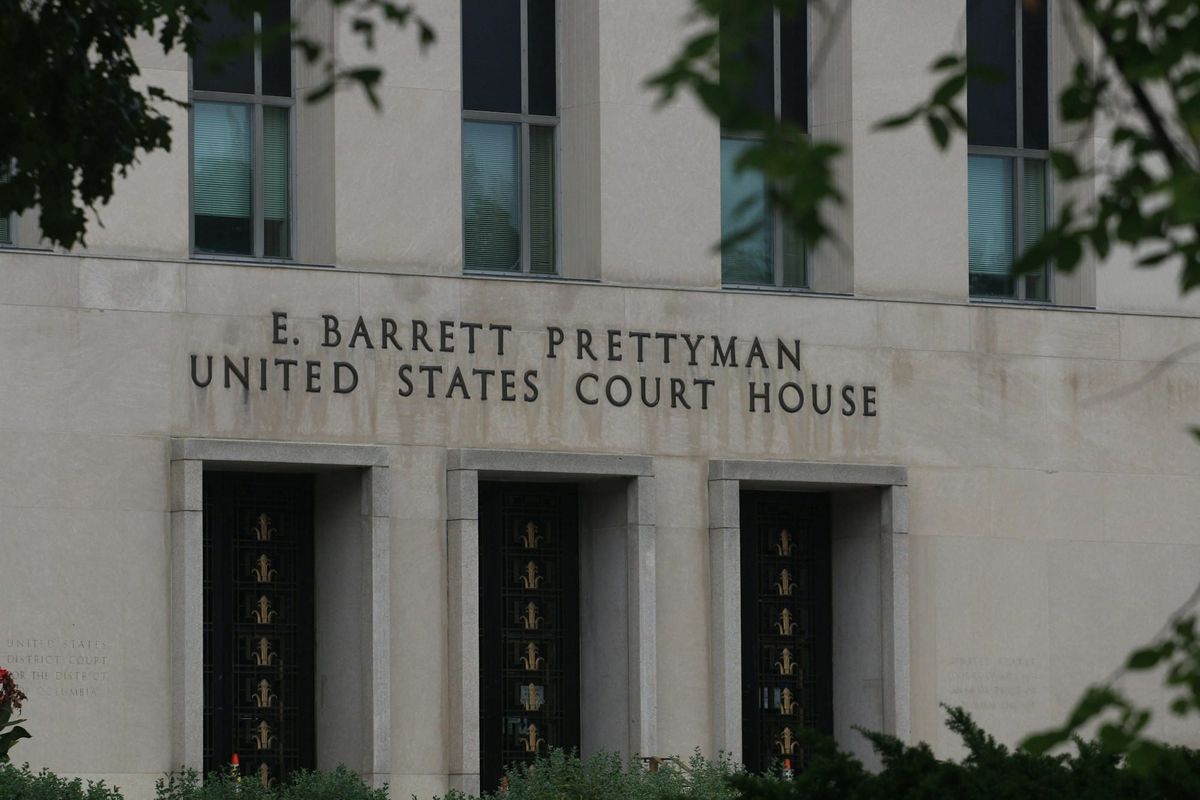
U.S. District Judge Randolph D. Moss ruled Sunday that Immigration and Customs Enforcement has disobeyed four separate court orders in a public-records lawsuit over its detention of immigrants at the Guantánamo Bay naval base in Cuba. He ordered ICE to explain by Dec. 9 why he shouldn't treat its handling of the records as unlawful withholding.
"Since that time, the Court has entered four separate orders requiring ICE to provide the information necessary to determine whether its referrals constitute unlawful withholdings. Each time, ICE has failed to comply," Moss wrote in the Nov. 22 memorandum opinion and order in American Oversight v. U.S. Immigration and Customs Enforcement (No. 1:25-cv-01846, D.D.C.).
The order is not a contempt finding, and Moss has not yet ruled that ICE broke the Freedom of Information Act.
Five pages, 14 months
The watchdog group American Oversight asked ICE and U.S. Southern Command in April 2025 for records on using Guantánamo to hold people in civil immigration proceedings, meaning cases about immigration status, not criminal charges. Neither agency answered on time, so the group sued in June 2025.
ICE released about 80 pages, then said in December 2025 that it had instead "referred" the remaining 64 pages to the Department of Homeland Security, the Army, the Coast Guard and Customs and Border Protection, according to Moss's Oct. 28 order. A referral hands records to the agency they came from. Under D.C. Circuit precedent, an agency "cannot simply refuse to act on the ground that the documents originated elsewhere," and a referral that significantly delays a requester counts as withholding, which is improper unless the agency can offer "a reasonable explanation."
Moss listed the four orders. In March, he told ICE to get completion estimates; its July report gave none. In September, he ordered a time frame; ICE's next report skipped the referred records. In October, he ordered ICE to explain why its referrals were reasonable; ICE "ignored those questions." On Oct. 28, he ordered a sworn declaration.
The task is small. "The Coast Guard, for example, has had over fourteen months to process five pages of records," Moss wrote, and the Army and DHS have had about as long for seven and 38 pages.
ICE's explanation
ICE's position came in a declaration from Bradley Close, chief of staff and acting assistant director of its Office of Information Governance and Privacy. ICE claimed it has "no control over [the] other agencies' timeline for completion."
Moss found that this doesn't answer the legal question: whether American Oversight would have had the records sooner if ICE had processed them itself. The record also contradicts part of ICE's account. The Close declaration says CBP sent its 14 pages back to ICE in January 2026. Moss wrote that this "contradicts several of ICE's previous status reports," which kept listing CBP as holding them.
Moss also noted that ICE referred 49 more pages in September 2026 and "has never explained why it took seventeen months to identify and refer those records."
American Oversight argued that ICE's filings didn't address the court's concerns. Chioma Chukwu, the group's executive director, told Law&Crime that people "have been taken from their communities and sent to a remote military facility." She added: "We deserve to know how they are being treated, whether they have access to lawyers and medical care."
A pattern of judges catching ICE
This is part of a pattern of federal judges finding that ICE ignored or worked around their orders this month:
- Nov. 2, Oregon: U.S. District Judge Mustafa Kasubhai found ICE "routinely violated" his order against warrantless arrests and that an officer lied in an arrest record. WR.N covered that ruling.
- Nov. 18, Colorado: U.S. District Judge Charlotte Sweeney held ICE officials in contempt for re-arresting a man right after she ordered him freed, writing that ICE's practice "made a mockery of court orders," NBC News reported. WR.N reported when ICE's Denver chief admitted ordering such re-arrests.
- Nov. 23, Vermont: U.S. District Judge Geoffrey Crawford freed a Haitian hospice nurse after ICE twice failed to get him to his own hearings, calling it a violation of his "basic due process rights," the Boston Globe reported.
What's next
The parties' next joint status report is due Dec. 1. ICE must show cause by Dec. 9 on both batches of referrals and process the 14 CBP pages by Dec. 31. Under the Oct. 28 order, ICE must also process at least 750 pages a month, and Southern Command, which reported about 17,000 responsive pages, must process 100 pages a month through December and 500 a month starting in January 2027.
If Moss finds the referrals were improper withholdings, ICE would be responsible for releasing those pages.
Sources
- Memorandum Opinion and Order, Nov. 22, 2026, American Oversight v. ICE, No. 1:25-cv-01846 (D.D.C.) (CourtListener)
- Memorandum Opinion and Order, Oct. 28, 2026, American Oversight v. ICE (CourtListener)
- American Oversight v. ICE docket (CourtListener)
- American Oversight v. ICE, DOD, and USSC: Detainment of Migrants at Guantánamo Bay (American Oversight)
- Judge puts Trump admin on a deadline to explain itself after ICE 'failed to comply' with 4 'separate' orders (Law&Crime, via Yahoo News)
- U.S. judge says ICE 'made a mockery of court orders' in Colorado (NBC News)
- A federal judge ripped into ICE after it twice failed to bring a detainee to court (Boston Globe)



Comments ()