

ICE's Denver chief admits ordering re-arrests of court-freed immigrants. A judge weighs contempt.
Agents re-detained at least 18 people in about a week after judges ordered them released, testimony showed.
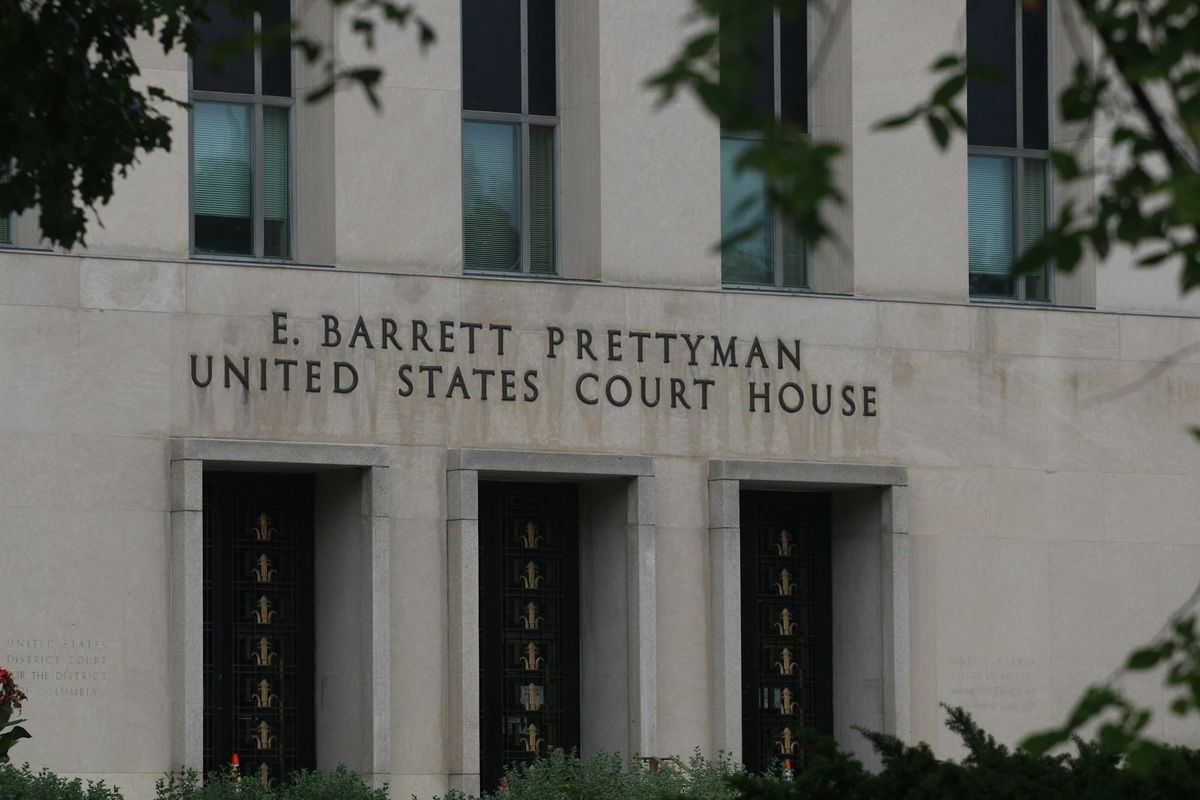
Nathan Rasper, acting director of U.S. Immigration and Customs Enforcement's Denver field office, testified in federal court on Nov. 9 that starting Oct. 27 he told agents to re-arrest immigrants federal judges had ordered released. U.S. District Judge Charlotte N. Sweeney of the District of Colorado is now deciding whether to start contempt proceedings, which can bring court sanctions for disobeying an order. Her minute entry says only: "Written order shall issue." No new hearing is set.
The case is Quintero Alvarez v. Baltazar, No. 1:26-cv-04891. Ramon Quintero Alvarez, a Wyoming resident held at the GEO Group detention center in Aurora, filed his habeas petition without a lawyer. On Oct. 20, Sweeney gave the government until Oct. 27 to justify holding him and ordered him freed within 24 hours if it filed nothing. It filed nothing. Instead, its Nov. 3 status report, quoted in Sweeney's order that day, said he "was released from immigration custody on October 27, 2026, was immediately re-detained, and remains in detention," and that the government "will not be submitting a brief that argues that the current detention is lawful."
Habeas corpus is the oldest legal check on government detention: a person in custody asks a federal judge to decide whether they are being held "in violation of the Constitution or laws" of the United States. If the judge says yes, the person goes free. A release that ends at the lobby door makes that ruling meaningless.
What ICE's own officials told the court
Nichole Black, an assistant field office director, testified she got "a direct order" to re-detain habeas releases with "some kind of criminality," Colorado Politics reported. Rasper testified that he gave the instruction verbally and believed it was lawful once "paperwork errors" were fixed. He said he acted after hearing that his "colleagues" in Minnesota were doing the same, MPR News reported, and he told the court he ordered the practice stopped on Nov. 4, according to CBS Colorado.
Sweeney was blunt. "Releasing somebody momentarily is not releasing somebody at all," she said on Nov. 4. On Nov. 9 she called the re-arrest "not a technical violation. It's a due process violation," and said the practice "has instilled a new level of fear in that facility."
The exact number of people affected isn't known. CBS Colorado reported testimony that at least 18 people were re-arrested in about a week. Sweeney's Nov. 5 order says the government's list showed 14 petitioners who were later released again. The ACLU of Colorado, which Sweeney allowed to file a brief and argue, told the court the list was likely an undercount. Judges Gordon P. Gallagher and Philip A. Brimmer have since rewritten their release orders to bar quick re-arrests.
The Minnesota playbook
MPR News has confirmed at least eight men in Minnesota re-arrested at the Bishop Henry Whipple Federal Building right after judges ordered them freed. One is Ivan, 27, a Guatemalan construction worker arrested Sept. 11 on his way to work and re-arrested twice. U.S. District Judge John Tunheim wrote that "allowing an individual to step one foot outside a cell is not release in any sense of the term," and ordered the government to show why it shouldn't be held in civil contempt. Briefs are due Saturday at 9 a.m. Government lawyer Derek Ganzhorn told the court, "I prefer to think of it as a new arrest." Minnesota judges are split: Tunheim and Jeffrey Bryan found re-arrests violated their orders, while Eric Tostrud and Jerry Blackwell declined to order men freed again. No appeals court has ruled.
Claim check: "sabotage"
A DHS spokesperson told CBS Colorado that barring these re-arrests is "nothing short of sabotage." Unsupported. The limits come from judges' own release orders. Sweeney called the re-arrest a due process violation, the U.S. Attorney's Office distanced itself from the statement in court, and ICE's Denver office has stopped the practice. The label offers no evidence.
Part of a pattern
Federal judges have repeatedly found that ICE ignored or worked around their orders. For example:
- Jan. 28, 2026, Minnesota: Chief Judge Patrick Schiltz found ICE violated court orders almost 100 times in 74 cases that month, writing that ICE "has likely violated more court orders in January 2026 than some federal agencies have violated in their entire existence."
- Aug. 2026, Colorado: Magistrate Judge N. Reid Neureiter ordered the government to show why it shouldn't be sanctioned after ICE re-detained Feliciano Paulino Soares four days after his release on bond.
- Nov. 2, 2026, Oregon: Judge Mustafa Kasubhai found that ICE "routinely violated" his order against warrantless arrests and that an agent admitted falsifying records.
What comes next
For working immigrants, a habeas win is often the only way home to a job and a family. Re-arrest on the courthouse steps means more weeks of lost pay, more legal bills and sometimes a transfer far from home. Watch for Sweeney's written contempt decision, Tunheim's ruling after Saturday's filings, and the first appeals court ruling on whether ICE can re-arrest someone a judge has just freed.
Sources
- ICE re-arrests in Colorado followed Minnesota's lead, official says (MPR News)
- ICE re-arrests man a second time; judge weighs contempt (MPR News)
- ICE official testifies re-arrests of detainees stopped, judge considers contempt (CBS Colorado)
- Quintero Alvarez v. Baltazar, No. 1:26-cv-04891 (D. Colo.), docket (Habeas Dockets)
- 'New level of fear': Judge interrogates Colorado ICE leader on tactics (Colorado Politics)
- 'Mockery, contempt': Federal judge launches inquiry for ICE violations (Colorado Politics)
- 28 U.S.C. § 2241 (Cornell LII)
- ICE blasted by Minneapolis judge for violating scores of orders (Bloomberg Law)
- Colorado judge explores sanctions against DOJ, ICE for rearresting man 4 days after release on bond (Colorado Politics)
- M-J-M-A v. Hernandez, No. 6:25-cv-02011 (D. Or.), opinion and order, Nov. 2, 2026 (U.S. District Court for the District of Oregon, via Courthouse News Service)


Comments ()