

Who gave $300 million to the account behind Trump's ballroom? The Interior Department won't say.
Records show the Park Service account took in $347 million in September. Its deal for ballroom donors lets them stay anonymous.
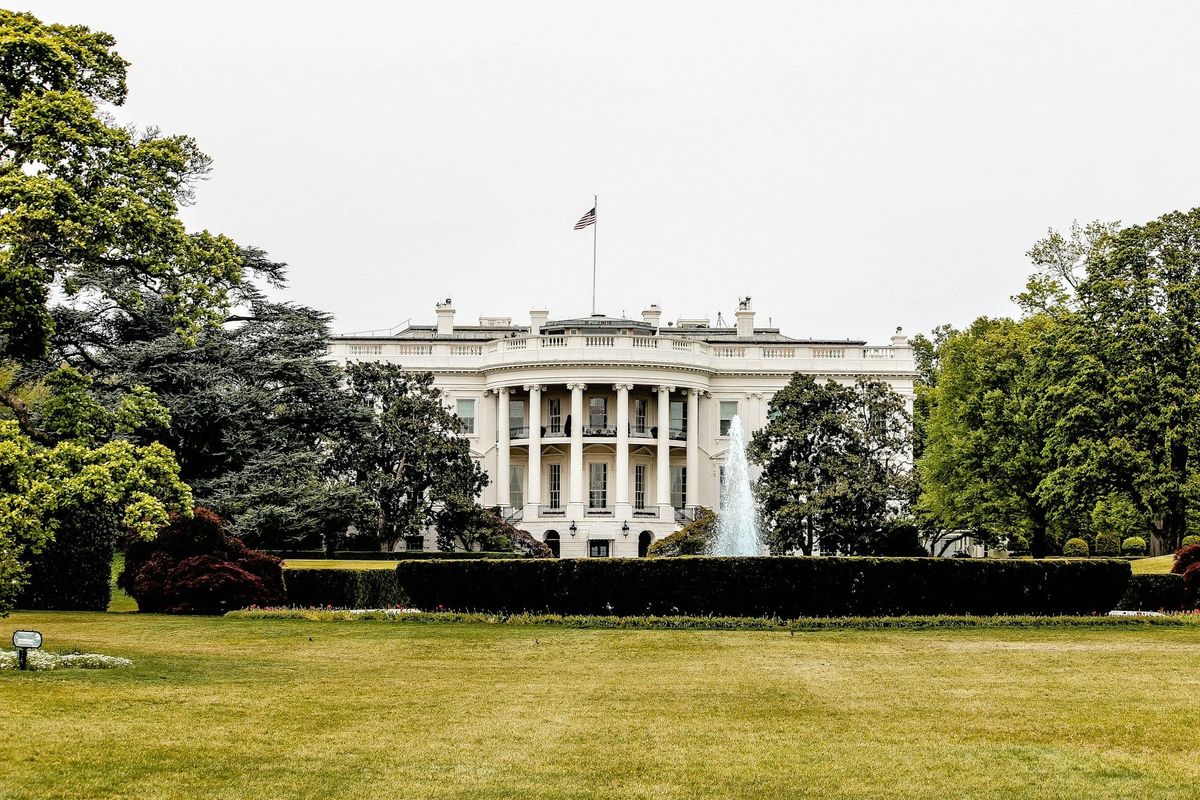
A National Park Service donations account that has paid for President Trump's makeover of Washington, D.C., took in $347 million in September, about $300 million more than the Interior Department expected, according to government financial reports reviewed by The New York Times. The reports don't say who gave the money, whether it came from one donor or several, or which projects it will pay for. Interior wouldn't say either.
The account was set up to collect gifts for national parks across the country and took in less than $100 million a year before Trump's second term, the Times reported. Since he returned to office it has received about $790 million. That money has gone to the White House ballroom, repairs to the Lincoln Memorial Reflecting Pool and design work on Trump's planned triumphal arch, which a federal judge has since blocked. The Times estimates the projects will cost more than $1 billion in all.
Who flagged it, and what Interior said
The jump was spotted by Tony Irish, a longtime Interior Department lawyer who is now senior counsel at the watchdog group Public Employees for Environmental Responsibility. "Are the donors seeking certain government benefits?" Irish asked. "We just don't know, because of the lack of transparency."
Interior spokesperson Katie Martin answered questions about the money with praise: "President Donald J. Trump has done more to make our nation's capital a shining beacon than any other president," she said. Her statement didn't address who gave the $300 million or what it's for, and the administration offered no records that would answer either question.
Last year the White House agreed to keep some ballroom donors' identities secret, arguing that no law required it to name them, the Times reported. In August, Trump told reporters in the Oval Office, "I'll give you names." As of mid-September, NBC News reported, the White House had published no donors beyond the 37 it listed in October 2025.
Secrecy written into the deal
The September money fits a pattern of secrecy, built into the paperwork, around who pays for Trump's D.C. projects. For example:
- April 22, 2026: After Public Citizen sued under the Freedom of Information Act, the government released the 14-page agreement among the White House, the Park Service and the Trust for the National Mall that governs ballroom fundraising. "This document reveals that anonymous donations are the heart of this agreement," said Jon Golinger of Public Citizen.
- Aug. 21, 2026: Rep. Jared Huffman (D-Calif.) and Rep. Maxine Dexter (D-Ore.), the top Democrats on the House Natural Resources Committee and its oversight panel, wrote to the Park Service that the agreement hands all donor vetting to the Trust. They said anonymous donors can stay hidden from the Trust doing the vetting and from the public, but "are notably not anonymous to the White House from whom they may be seeking favor." Because the anonymity clause applies "notwithstanding" the ban on foreign donors, they wrote, it "appears to create a backdoor for foreign entities."
- Nov. 11, 2026: After Sen. Richard Blumenthal (D-Conn.) wrote to ballroom donors, Aaron Reitz, the U.S. attorney for the Southern District of Texas, ordered him to preserve his records and warned that his inquiry could violate federal civil-rights criminal laws.
Why it matters if you're not a donor
Many companies that give to Trump's projects have business before his government. A Public Citizen report in June found that 14 of the 27 known corporate ballroom donors had won new or expanded federal contracts worth more than $50 billion in six months, The Washington Post reported. With the September donors unnamed, the public can't run the same check on them.
What comes next
Democrats take control of both chambers of Congress in January, and Huffman is set to chair the Natural Resources Committee, which oversees the Park Service. He has said the committee has "a large arsenal of tools," including subpoenas. Whistleblowers have already told House Democrats that Interior is destroying records tied to Trump's building projects, a claim Interior calls false.
Sen. Elizabeth Warren (D-Mass.) and Rep. Robert Garcia (D-Calif.) have proposed the Stop Ballroom Bribery Act, which would ban anonymous donations to projects that honor or serve a sitting president or vice president, require the Park Service to publish every such donation each quarter, and bar donors with federal contracts, lawsuits or pardon requests from giving at all. Trump would still have a veto.
Watch for Huffman's first hearings in January, and for whether Interior's next monthly reports show more unexplained money.
Sources
- Account funding Trump's DC makeover got $300 million boost (The New York Times, via GV Wire)
- Trump vowed to identify more of the donors to his ballroom project. That hasn't happened yet. (NBC News)
- Trump Administration Finally Discloses White House Ballroom Funding Contract in Response to Public Citizen's FOIA Lawsuit (Public Citizen)
- Letter to NPS on ballroom donor vetting, Aug. 21, 2026 (House Natural Resources Committee Democrats)
- Ballroom donors won $50B in contracts after giving to Trump project, watchdog group finds (The Washington Post, via Anchorage Daily News)
- Stop Ballroom Bribery Act summary (Office of Sen. Elizabeth Warren)
- Whistleblowers say Trump's Interior Department is destroying records on his D.C. building projects (WorkersRights.News)
- Blumenthal asked who paid for Trump's ballroom. A U.S. attorney says that may violate civil-rights law. (WorkersRights.News)

Comments ()