

New Hampshire tells its Supreme Court there's no 'fundamental right to vote absentee.' Three blind voters are challenging its ID law.
The state is defending SB 287, which makes absentee voters send ID, get a notary or visit the clerk before every election.
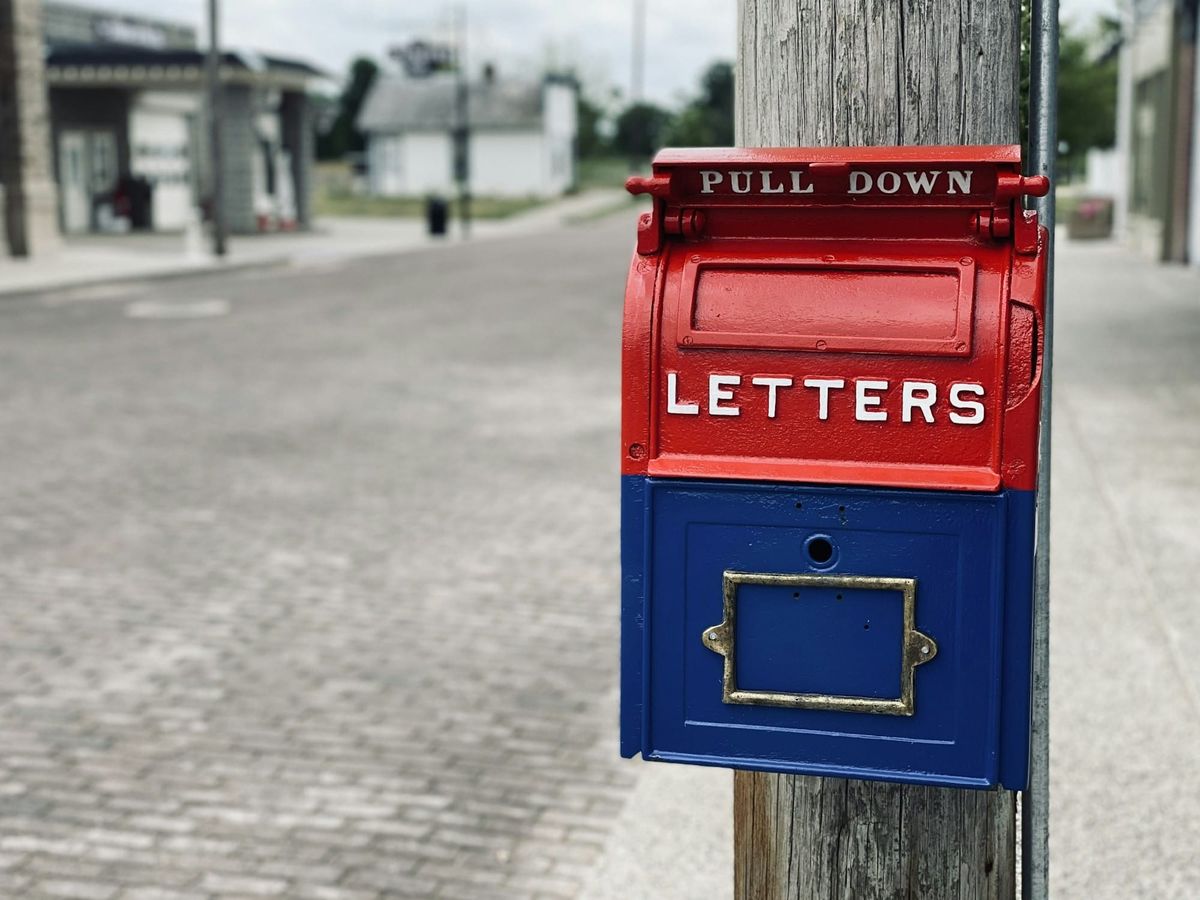
New Hampshire's Justice Department told a substitute panel of the state Supreme Court on Monday, Nov. 23, that voters have no fundamental right to vote absentee. It was defending SB 287, a 2025 law that makes absentee voters prove their identity every time they request a ballot.
"Obviously, you have a fundamental right to vote. You do not have a fundamental right to vote absentee," Mary Triick, a senior assistant attorney general, said at the hearing, Democracy Docket reported.
The case is Robertson v. Scanlan, No. 2026-0030 in the New Hampshire Supreme Court. Adele Robertson, Daniel Frye and Regina Wilson, whom their opening brief describes as "three legally blind New Hampshire voters," sued Secretary of State David Scanlan and Attorney General John Formella in August 2025.
What the law requires
SB 287, now RSA 657:17-c, says "no absentee ballot shall be issued" until the voter does one of three things: mails a copy of a photo ID with the application, gets the application signature notarized, or shows photo ID to the town or city clerk in person. New Hampshire has no permanent absentee list, so voters repeat the process for every local, primary and general election. Gov. Kelly Ayotte signed the bill on Aug. 1, 2025, and it took effect Sept. 30, 2025.
Just under 100,000 people voted absentee in the 2024 general election, about 12% of ballots cast, according to the plaintiffs' brief and NHPR.
The ruling under appeal
Rockingham County Superior Court Judge David W. Ruoff dismissed the suit on Dec. 11, 2025, without a hearing. He held that the law "imposes reasonable, nondiscriminatory identification burdens on absentee voters to protect the State's interest in securing elections and limiting voter fraud." He added that "the identification requirements impose ordinary burdens on all absentee voters, and the possibility that it may cause additional burden on a subset of absentee voters does not render the entire statute unconstitutional."
Each side's case
The voters ask the Supreme Court to reverse the dismissal and send the case back so they can build a record. Their brief says the law forces them to "make a special trip, pay a fee, or obtain and operate a means of copying their identification cards," and that the state had no "meaningful problem with voters requesting absentee ballots in other voters' names—the only form of voter fraud that SB 287 could prevent."
"The burden of continuing to do that over and over again every year, every election, when they want to participate as a voter, is too great," David Fox, the voters' lawyer, told the court, NHPR reported.
The state's brief says "the Plaintiffs have no fundamental right to vote by absentee ballot," argues that only rational-basis review applies, and relies on McDonald v. Board of Election Commissioners of Chicago, a 1969 U.S. Supreme Court ruling. At the hearing, the state argued that in-person voters already must show ID, so extending the rule to absentee voters is justified. "That is a rational way to proceed," Triick said, adding, "It is clearly not a substantial burden," according to NHPR.
Judge Charles Temple pushed back. The New Hampshire Constitution, unlike the federal one, orders the Legislature to provide absentee voting for people who "by reason of physical disability are unable to vote in person." "Isn't that a huge difference?" Temple asked, according to Democracy Docket.
The court's sitting justices recused themselves, and a panel led by retired Superior Court Chief Justice Tina Nadeau heard the case, NHPR reported. The Judicial Branch posted the argument video. No decision date has been announced. SB 287 stays in force while the appeal is pending.
A fight playing out in state courts
This is part of a pattern of 2026 fights over new mail-voting limits being decided under state constitutions, with mixed results. For example:
- Montana, Oct. 2, 2026: A Lewis and Clark County judge struck down a law requiring voters to write their birth year on absentee ballot envelopes, in a suit by Disability Rights Montana and Big Sky 55+. The state, the court wrote, "has failed to meet its burden of proving HB 719 is reasonable" (order).
- Kansas, July 16, 2026: A Douglas County judge blocked SB 4, which would have thrown out mail ballots arriving after 7 p.m. on Election Day, restoring the three-day grace period for now (order).
- Kansas, October 2026: A trial court upheld a law barring mail ballots with missing or mismatched signatures, State Court Report found.
In New Hampshire, the U.S. Supreme Court let the state bar student IDs at the polls in October, and Trump's Justice Department is backing its proof-of-citizenship law.
Until the court rules, New Hampshire absentee voters need a copy of their ID, a notarized signature or a clerk visit for every ballot request.
Sources
- New Hampshire argues voters have no right to cast mail ballots — Democracy Docket
- NH Supreme Court hears challenge to voter ID requirements brought by visually impaired voters — NHPR
- Order on Defendants' Motion to Dismiss, Robertson v. Scanlan (Dec. 11, 2025) — Rockingham County Superior Court, via Democracy Docket
- Brief of Plaintiffs-Appellants (April 9, 2026) — N.H. Supreme Court filing, via Democracy Docket
- Brief for the Secretary of State and Attorney General (May 29, 2026) — N.H. Supreme Court filing, via Democracy Docket
- Oral argument video, No. 2026-0030 — New Hampshire Judicial Branch on Vimeo
- Order on Motion for Summary Judgment, Disability Rights Montana v. State (Oct. 2, 2026) — Montana First Judicial District Court, via Democracy Docket
- Order Granting Temporary Injunction, Kansas Appleseed v. Schwab (July 16, 2026) — Douglas County District Court, via Democracy Docket
- Mail Voting Restrictions Face State Constitutional Challenges — State Court Report (Brennan Center)
- Supreme Court allows New Hampshire to fully ban student IDs for voting in midterms — PBS NewsHour
Comments ()