

Judge throws out Trump's four-year cap on foreign students. Grad workers, postdocs and foreign journalists keep their status.
Judge F. Dennis Saylor IV vacated the DHS rule as "arbitrary, capricious, an abuse of discretion, and otherwise not in accordance with law."
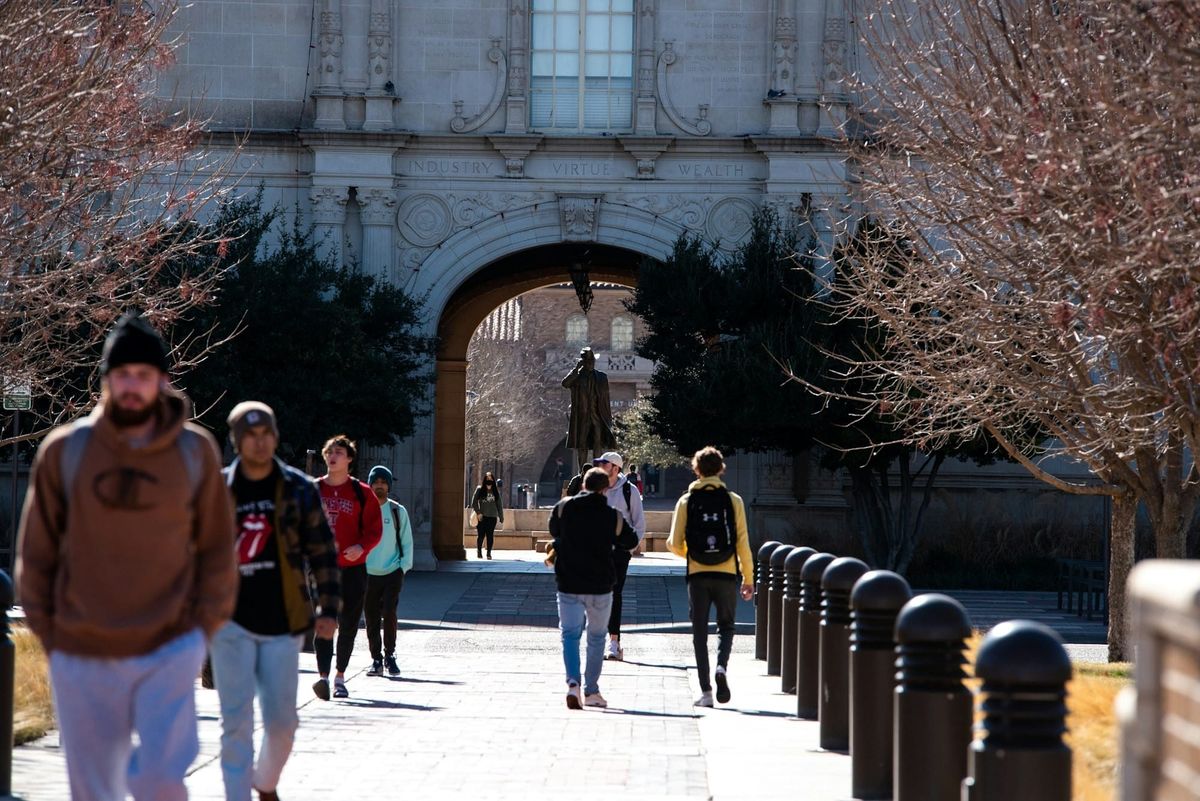
A federal judge in Boston on Monday threw out the Trump administration's rule capping how long international students, visiting scholars and foreign journalists can stay in the United States, calling it "arbitrary, capricious, an abuse of discretion, and otherwise not in accordance with law."
U.S. District Judge F. Dennis Saylor IV of the District of Massachusetts granted summary judgment on Nov. 16 to a coalition of college groups and unions in Presidents' Alliance on Higher Education and Immigration v. U.S. Department of Homeland Security, No. 1:26-cv-13799, and vacated the rule under the Administrative Procedure Act. Vacating a rule wipes it out for everyone, not only the groups that sued. Saylor had postponed the rule on Sept. 14, a day before it was to take effect; Monday's order is his final ruling on the merits.
Four years and out
The rule, published July 17, would have ended "duration of status," the decades-old system that lets F students, J exchange visitors and I foreign-media workers stay as long as their program or assignment lasts. Students and scholars would have been admitted for their program length, capped at four years, then forced to apply for an extension. Foreign journalists faced a 240-day cap. Graduate students could not have changed programs, students could not have started a second degree at the same or a lower level, and the grace period to leave after school or post-graduation work training would have dropped from 60 days to 30.
The workers behind the visas
Four of the eight plaintiffs are unions. The UAW says it represents about 120,000 higher-education workers, "including thousands of international students, postdoctoral researchers, and scholars holding F and J visas." Brown University's graduate worker union, UAW Local 2322 (graduate workers and postdocs at UMass Amherst) and The NewsGuild-CWA, whose locals represent foreign journalists on I visas, also sued. The complaint says international graduate students "staff research laboratories, teach in American classrooms, [and] provide essential medical care at teaching hospitals."
"Put bluntly"
Saylor adopted his September findings that DHS failed to weigh costs and benefits, consider alternatives or answer major comments, and that its fraud and national-security reasons "did not support the agency action." He added two more. DHS never explained how "an unreviewable, completely discretionary renewal system" after four years would help it "root out cases of fraud," he wrote. And the limits on changing programs and earning joint or second degrees exceed DHS's power under the immigration law: "Put bluntly, DHS is seeking to prevent or discourage the very activity—providing educational opportunities for foreign students in the United States—that Congress sought to permit and encourage."
DHS asked the court to send the rule back without striking it. Saylor refused: "The current regime has existed for decades, and the Final Rule has not gone into effect."
Each side
The plaintiffs asked the court to vacate, stay and block the rule. Their complaint argues DHS "has failed to identify any concrete, systemic problem with the existing duration of status system that would justify a complete regulatory overhaul." Miriam Feldblum, president and CEO of the Presidents' Alliance, called the ruling "a clear and important victory for international students and scholars." AFT President Randi Weingarten called the limits "arbitrary and hostile."
In the rule, DHS claimed duration of status "has created incentives for fraud and abuse." The court found that rationale didn't support the rule and noted DHS already catches fraud through school reporting, including prosecuting "pay-to-stay" schemes. DHS and the Justice Department did not respond to the Boston Globe's requests for comment.
A pattern of "arbitrary and capricious" rulings
The ruling is part of a pattern of courts finding Trump policies aimed at immigrants arbitrary and capricious. For example:
- June 5, 2026: Chief U.S. District Judge John McConnell Jr. struck down USCIS policies freezing asylum, work permit, green card and citizenship decisions for immigrants from 39 countries as "contrary to law and arbitrary and capricious," the AP reported.
- Oct. 7, 2026: U.S. District Judge Amir H. Ali paused a DHS policy of refusing to collect biometric data from detained immigrants with pending applications. Asked how it served its stated goals, a government lawyer said, "I don't have an answer to that right now."
- Nov. 13, 2026: The 2nd U.S. Circuit Court of Appeals ruled that the Transportation Department acted in a way that was "arbitrary, capricious, or contrary to law" when it withheld nearly $74 million from New York over licenses held by immigrant truck drivers, the AP reported.
What's next
The government's appeal of the September order sits at the 1st U.S. Circuit Court of Appeals, which paused it for 30 days on Nov. 13. NAFSA says that appeal may now be moot and the government may separately appeal Monday's judgment. No hearing is set. Unless the ruling is stayed or reversed, duration of status stays in place.
Meanwhile, new international enrollment fell 15% this fall and OPT work-training participation dropped 6%, according to an Institute of International Education survey reported by CNN.
Sources
- Memorandum and Order on Cross-Motions for Summary Judgment, Presidents' Alliance v. DHS, No. 1:26-cv-13799 (D. Mass. Nov. 16, 2026) (NAFSA copy) - U.S. District Court for the District of Massachusetts
- Complaint, Presidents' Alliance v. DHS (filed Aug. 18, 2026) (NAFSA copy) - U.S. District Court for the District of Massachusetts
- Final rule: Establishing a Fixed Time Period of Admission and an Extension of Stay Procedure, 91 Fed. Reg. 44976 (July 17, 2026) - Federal Register via GovInfo
- Legal Challenge to the Final Rule Ending Duration of Status - NAFSA
- Federal Court Rules in Favor of Coalition Challenging Rule Ending Duration of Status - NAFSA (joint plaintiffs' statement)
- Boston judge blocks Trump administration's limits on international student visas - Boston Globe
- DHS Limits on F-1 Foreign Students' Stay in US Overturned - Bloomberg Law
- Judge Vacates International Student Visa Limits - Inside Higher Ed
- Judge Rules Against Department of Homeland Security Four-Year Visa Cap - The Harvard Crimson
- Judge strikes down Trump policy that halted asylum decisions for 39 countries - PBS NewsHour (AP)
- Memorandum Opinion and Order, J.Z. v. DHS, No. 26-cv-01510 (D.D.C. Oct. 7, 2026) - U.S. District Court for the District of Columbia (NIPNLG copy)
- Appeals court rules against Trump administration on New York highway funds - Associated Press via KIRO 7
- Fewer students are traveling from abroad to study at US universities, report shows - CNN

Comments ()