

As America breaks, the disaster prep industry booms
After a nationwide flight shutdown and tech outages, shoppers are stocking up and one bunker seller moves a shelter a day.
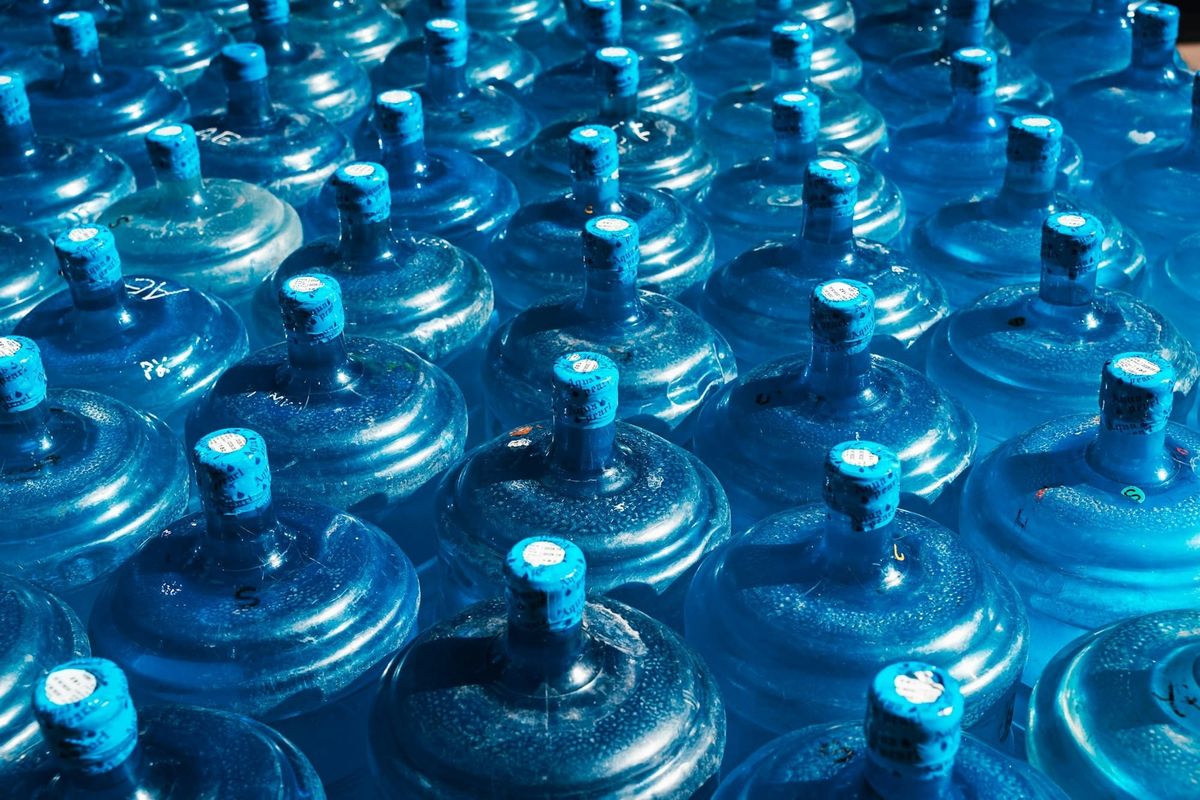
Americans are stocking up on water, canned food and generators, and at least one bunker maker says he's selling a bomb shelter a day. The rush had been building for weeks and picked up after the nation's air traffic system went down and major tech platforms failed, while the federal disaster aid many families count on has become harder to get, especially in Democratic-led states.
A week of failures
On Nov. 13 at about 3:30 p.m. Eastern, the Federal Aviation Administration lost stable communications at 17 of its 22 regional air traffic control centers and ordered a nationwide ground stop, according to the FAA. Flights resumed that night, but operators canceled about 12,462 flights. The FAA traced the problem to data flooding its network from sites in Texas and Arkansas, where its contractor L3Harris had been doing work. The agency said it had "no indication that this was a cyberattack."
The ground stop came a day after a widespread Microsoft Outlook outage, NewsNation reported. President Trump called the outages "just life," NewsNation reported. Transportation Secretary Sean Duffy and others have called for tens of billions of dollars to replace the nation's technology infrastructure.
The shopping list
The buying started before the ground stop. For the four weeks ending Nov. 1, sales of water purification tablets rose 154% from a year earlier and disinfecting wipes rose 72%, according to Circana data cited by RBC Capital Markets, CBS News reported. Walmart told RBC it is seeing a spike in sales of soup, water and ready-to-eat foods. Mizuho analyst David Bellinger tied a jump at Costco to the Outlook outage and the ground stop, saying shoppers are "pantry-loading" and that high-ticket generators sold out online. Tractor Supply told CBS News that demand is up for generators, liquid storage tanks and propane tanks.
"People want to be comfortable knowing that if we did have an outage for a couple of days, they'd have food in the house," said Steven Shemesh, a retail analyst at RBC Capital Markets.
Bunkers are moving too. "In 2018, I sold one bomb shelter. Now I'm selling a bomb shelter a day in most cases," Ron Hubbard, owner of Atlas Survival Shelters in Montebello, Calif., told NewsNation. He said shelters run from thousands of dollars into the millions, and that buyers cite the war with Iran, cybersecurity incidents and fears of collapse.
Less of a safety net
Families who count on federal help after a disaster have reason for doubt. President Trump has taken longer to approve disaster requests than any president since 1989 and has denied a greater share, an Associated Press analysis of FEMA data found in July. He approved 80% of requests from Republican governors and about 60% from Democratic governors. Seventy percent of his approvals have taken at least a month.
The gap is wider for states run entirely by Democrats. In his first 14 months back in office, Trump approved 23% of requests from states with a Democratic governor and two Democratic senators, compared with 89% from Republican-led states, E&E News found. The denials blocked about $250 million in aid. For example:
- Washington, April 2025: Trump rejected aid for November 2024 storms and flooding after FEMA documented $34 million in damage, more than twice the state's threshold, E&E reported.
- Illinois, 2025: He denied two requests to help homeowners after FEMA documented $46 million and $83 million in home damage from summer storms.
- July 2026: He denied aid to New Jersey, Massachusetts, New York and Rhode Island for the February blizzard after FEMA and NOAA found all four met federal thresholds, E&E News reported. The states had sought $227 million.
Trump has also tied aid to elections. At a September rally in Gastonia, N.C., he said he would send more disaster aid only if Republican Michael Whatley wins the state's Senate race, then said he was "only kidding," the New York Times reported.
White House spokesperson Abigail Jackson has said there is "no politicization to the President's decisions on disaster relief," and that the administration reviews requests more thoroughly than past ones.
Sarah Labowitz, who studies disaster policy at the Carnegie Endowment for International Peace, called aid that depends on a president's favor "a bad system."
Sources
- Nationwide Ground Stop: Questions and Answers, Federal Aviation Administration
- Doomsday prep rush sparked by confluence of outages: Ex-FBI agent, NewsNation (via Yahoo News)
- Consumers stock their doomsday pantries as tech outages cause jitters, CBS News
- Doomsday prep purchases up after ground stop, tech outages, NewsNation (via Yahoo News)
- Trump is taking longer to approve disaster aid and denying Democratic states more frequently, Associated Press (via WTOP)
- It's three times harder for blue states to get disaster funding under Trump, E&E News
- FEMA said yes to Democratic disaster requests. Trump killed them anyway., E&E News
- Trump ties disaster aid to votes as midterm fight heats up, New York Times (via The Philadelphia Inquirer)
Comments ()